- Onset
- Under 1 min · 30–45 min (ayahuasca)
- Duration
- 10–20 min · 4–6 hr (ayahuasca)
- Route
- Vaporized · ayahuasca
- Forms
- Freebase crystal · brew
- Legal
- Schedule I (US); illegal in most jurisdictions
The tryptamine behind the doorway
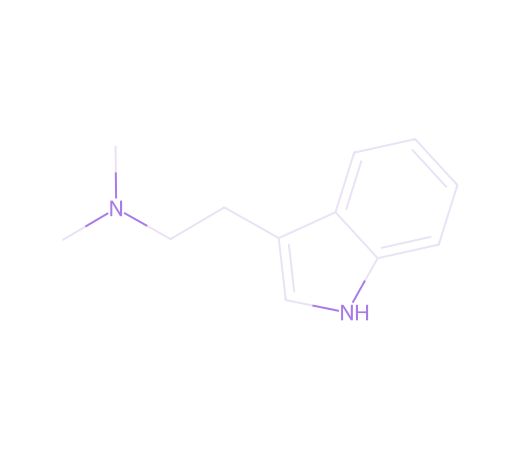
DMT is N,N-Dimethyltryptamine, a tryptamine found in plants and animals across the world, including the human body. In its freebase form it is usually vaporized, producing an experience measured in minutes rather than hours.
The same molecule is the light half of ayahuasca, where it is combined with a plant that blocks the stomach's MAO enzymes. Without that blockade, swallowing DMT does almost nothing; with it, the experience stretches across a whole night.
From snuff to laboratory
Indigenous peoples of the Amazon have known DMT through ayahuasca and snuffs for centuries or longer. The brew pairs a DMT-containing plant, often chacruna or chaliponga, with the ayahuasca vine itself.
Richard Manske first synthesized DMT in 1931, and it was later identified in plants by Gonçalves de Lima in 1946. For decades it sat in the pharmacological shadows until Rick Strassman's studies at the University of New Mexico in the 1990s gave it the nickname "the spirit molecule" and sparked a new wave of scientific curiosity.
Five minutes of serotonin fire
DMT acts as an agonist at the 5-HT2A serotonin receptor, the same target shared by psilocybin and LSD. It also binds to other serotonin receptors, which may help explain the vividness and strangeness of the state.
The reason vaporized DMT is so brief is that monoamine oxidase in the body breaks it down almost as fast as it arrives. Ayahuasca slows that breakdown, turning a flash into a sustained journey. Brain imaging shows the visual and salience networks lighting up while the default mode network falls apart.
Instant, total, and unforgettable
Vaporized DMT comes on within seconds. The visual field fills with fast-moving geometry, then the sense of being in an ordinary room dissolves. Many people describe entering a space that feels inhabited, and encountering beings or intelligences that seem entirely real.
Time becomes hard to track. A ten-minute experience can feel like hours, or like no time at all. The body may feel heavy or as though it is vibrating at a high frequency. Some describe a sense of death and rebirth; others describe beauty too large to hold.
Ayahuasca is a different creature. The onset is slower, the body often purges, and the experience is more emotional and relational. The visions are vivid, but the real work often happens in the integration that follows.
Where you land matters
These ranges are for vaporized freebase DMT. Ayahuasca is harder to quantify because brew strength varies. Tap a band to see it.
The full tryptamine doorway. Intense visuals, entity-like presences, time dissolving. A sitter and safe setting matter.
Intensity is the risk
Physically, DMT is non-toxic at typical doses. The danger lives almost entirely in the mind and the setting. The experience can be so overwhelming that a person forgets they took a drug, which makes a safe environment and a sober sitter essential.
Vaporized DMT can cause a rapid rise in heart rate and blood pressure. It is not safe for people with cardiovascular issues. The sudden onset also creates a real fall risk if someone is standing or holding a hot pipe.
Avoid with a personal or family history of psychosis, schizophrenia, or bipolar disorder. Dangerous with MAOIs, SSRIs, lithium, and stimulants. Ayahuasca in particular requires strict dietary and medication precautions.
Sitter, setting, and start low
Three things matter more than anything else with DMT.
- Have a sober sitter. Someone calm, trustworthy, and physically close enough to take the pipe if your grip loosens. Their job is safety, not conversation.
- Use a safe position. Recline or lie down before inhaling. A hot vaporizer or pipe falling is a common and preventable injury.
- Do not mix. Combining DMT or ayahuasca with other serotonergic drugs, MAOIs, or stimulants raises the risk of serotonin syndrome, dangerous blood pressure changes, and psychological instability.
From the vine to the lab
Ayahuasca
The brew is not just DMT. It is a relationship between plants, a lineage of practitioners, and a ritual container that holds the experience. Traditionally it is used for healing, divination, and spiritual contact. The spread of ayahuasca tourism has brought both genuine access and serious concerns about safety, exploitation, and respect for Indigenous knowledge.
The spirit molecule
Rick Strassman's work in the 1990s gave DMT a name that stuck. His volunteers reported encounters with beings, near-death-like states, and experiences they struggled to describe in ordinary language. The research was controversial and limited, but it reopened a scientific conversation that had been closed for decades.
The entity question
Reports of autonomous beings are among the most striking features of DMT. Science has no consensus on what they are: projections of the mind, archetypes, or something else entirely. The honest answer is that nobody knows. What is clear is that the experience can feel more real than ordinary reality, which is exactly why integration matters.
[owner voice — a short, personal note on how to approach DMT.]
Sources
- Strassman, R. — DMT: The Spirit Molecule (2001)
- Nichols, D.E. (2016). Psychedelics. Pharmacological Reviews.
- Erowid — DMT vault
- ICEERS — Ayahuasca resources