- Onset
- 30–45 min
- Duration
- 3–6 hr
- Route
- Oral
- Forms
- Crystal · tablet · capsule
- Legal
- Schedule I (US); therapeutic research in progress
Connection in chemical form
MDMA is not a classical psychedelic. It is an entactogen or empathogen, a class of substances that produce emotional openness, empathy, and reduced fear. Its signature is not visual distortion or ego dissolution; it is the feeling that you can finally say what you mean.
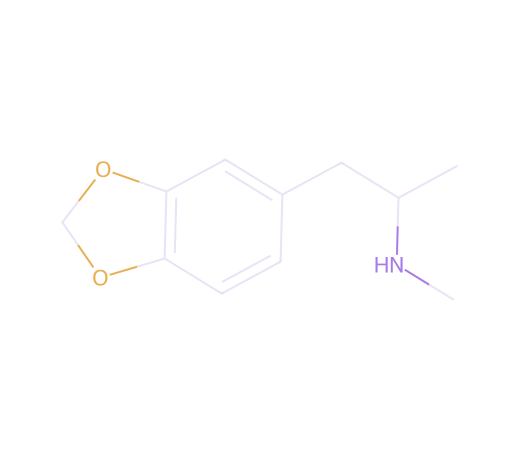
Chemically it is 3,4-methylenedioxymethamphetamine, related to both amphetamines and mescaline. That mixed ancestry shows up in the experience: stimulation, warmth, tactile enhancement, and a clear head at moderate doses.
From Merck to the dance floor
MDMA was first synthesized by Merck in 1912, though the common story that it was developed as an appetite suppressant is a myth. It sat unused until Alexander Shulgin resynthesized it in the 1960s and recognized its psychoactive effects.
In the late 1970s and early 1980s a small circle of therapists used it under the name Adam. Then it reached the clubs. The U.S. emergency-scheduled it in 1985, and by the 1990s ecstasy was central to rave culture. In the 2010s MAPS-sponsored trials for PTSD brought it back into serious clinical conversation.
A flood of serotonin, dopamine, and norepinephrine
MDMA works primarily by causing a massive release of serotonin, along with dopamine and norepinephrine. It also mildly inhibits serotonin reuptake. The result is a window of reduced fear, increased empathy, and enhanced reward.
That same flood can be exhausting. Serotonin neurons can be damaged by heavy or frequent use, which is the basis for the three-month rule: space sessions at least three months apart to let the system recover. The risk is dose-dependent and strongly tied to frequency.
Warm, honest, and embodied
The come-up is a slow wave of anticipation and warmth. Thirty to forty-five minutes in, the body feels light, music becomes physical, and conversation flows with unusual ease. People describe a sense of love without an object, a tenderness toward themselves and others.
The peak lasts one and a half to three hours. Touch feels extraordinary, lights are beautiful, and emotional guardedness drops away. There can be jaw clenching, nystagmus, and a fast heartbeat. At higher doses the clarity fades and the stimulation dominates.
The comedown can be soft or heavy depending on dose, sleep, and frequency. Some people feel drained or low for a day or two. Others feel an afterglow of openness. Heavy use tends to erode the magic and leave depression in its place.
Where you land matters
MDMA is usually dosed by body weight and by desired intensity. These are common oral ranges for pure MDMA; adulterated pills can contain anything. Tap a band to see it.
The full empathogen. Emotional honesty, tactile warmth, connection, and a clear body high. The standard therapeutic range.
The dangers are physical, not visionary
MDMA can be neurotoxic to serotonergic neurons, especially with heavy or frequent use. The evidence is dose-dependent and linked to overheating and oxidative stress. Memory problems, depression, and reduced emotional resilience have been reported in heavy users.
The acute risks are hyperthermia and hyponatremia. Hyperthermia is most common in hot, crowded environments where people dance for hours without cooling down. Hyponatremia comes from drinking too much water too fast; the drug causes the body to retain fluids. Sip water or electrolytes, do not chug liters.
Avoid with SSRIs, MAOIs, stimulants, lithium, or heart conditions. Adulterants like PMA, PMMA, meth, and cathinones are common in pills and powders. Reagent testing is essential.
Test, cool, sip, space
Three practices carry most of the safety with MDMA.
- Test your substance. Use at minimum Marquis and Simon's reagents. If the result is wrong or ambiguous, do not take it.
- Control your temperature and hydration. Take breaks from dancing, wear light clothing, and sip water or an electrolyte drink slowly. The goal is cool and hydrated, not soaked and overheated.
- Respect the three-month rule. More frequent use accelerates tolerance, diminishes the experience, and may cause lasting harm. The brain needs time to recover.
From the clinic to the rave and back
Adam in therapy
Before prohibition, a small network of therapists used MDMA to help couples talk and trauma patients feel safe enough to revisit hard material. The work was informal and mostly lost when the drug was scheduled, but it laid the groundwork for today's clinical trials.
Ecstasy and rave culture
In the 1980s and 1990s, MDMA became ecstasy and moved onto dance floors. Rave culture built itself around music, lights, and collective euphoria. The era also produced some of the first organized harm-reduction responses, from chill-out tents to peer education.
The PTSD trials
MAPS-sponsored Phase 3 trials showed that MDMA-assisted therapy could significantly reduce PTSD symptoms, leading to FDA Breakthrough Therapy designation. The results are promising but the therapy is not just the drug; it is the careful container around it.
[owner voice — a short, personal note on how to approach MDMA.]
Sources
- Mitchell, J.M. et al. (2021). MDMA-assisted therapy for severe PTSD. Nature Medicine.
- DanceSafe — MDMA
- RollSafe
- Erowid — MDMA vault